Why Drone Seeding Services Are Reshaping UK Farmland
Walking a wet field in late autumn, I remember thinking there had to be a better way. The contractor had pulled out, the seed was sitting in the shed, and the forecast showed rain for the next ten days. That was the moment I first looked into drone seeding services, and it changed how I think about getting crops established.
Drone seeding is not about replacing the drill in every situation. It is about using the right tool for the right job, especially when conditions turn against you. A multicopter carrying a seed hopper can fly over ground that would bog a tractor, drop seed with surprising accuracy, and do it all without compacting the soil. For many growers, that is the difference between a missed window and a successful establishment.
The Practical Side of Aerial Seeding
At its core, drone seeding is about placement and timing. A well-flown drone can distribute seed evenly across a paddock, using RTK GPS to follow precise lines and avoid overlaps. The accuracy is remarkable. You can set the spread width, adjust the rate on the fly, and monitor the job from a tablet. It is not magic, but it is close to it when you compare it to hand broadcasting or waiting for a dry spell.
The real value shows up in cover crops. After harvest, the window for getting a cover crop in is often narrow. You might have straw to deal with, moisture to chase, and a contractor who is booked solid. A drone can fly the field the same day the combine leaves, dropping a mix of species directly onto the stubble. That early start means better establishment, more biomass before winter, and a genuine step toward regenerative agriculture.
No-till farming and drone seeding fit together naturally. When you are trying to avoid disturbing the soil, the last thing you want is a heavy machine running over it. A drone never touches the ground. It flies above the crop, drops the seed, and leaves the soil structure intact. That matters for soil health, for earthworm activity, and for the biology that drives nutrient cycling.
What Drone Seeding Can and Cannot Do
Let us be honest about the limitations. A small consumer drone will not cover a 50-hectare field in an afternoon. Commercial systems, like the DJI Agras series or Yamaha's agricultural platforms, carry larger hoppers and fly faster, but they still work best on smaller blocks or for spot treatment. If you need to drill 200 hectares of spring barley into a stale seedbed, a conventional drill remains the sensible choice.
Where drones excel is in the awkward jobs. Headlands, corners, wet patches, and areas that are simply too small to justify bringing in a drill. They also shine for overseeding pastures, broadcasting clover into an established sward, or applying slug pellets after a wet spell. In those situations, drone seeding services can save days of waiting and keep the crop moving.
The key is to match the tool to the task. A drone is not a replacement for a John Deere drill on a 500-acre arable farm, but it is a serious option for the jobs that fall through the cracks. That is the mindset that makes it work.
Technology and the Human Touch
Flying a seeding drone is not just pushing a button. It requires a pilot who understands agronomy, wind patterns, and the equipment. RTK GPS gives centimetre-level accuracy, but it does not tell you when the wind is too strong for the seed to land where you want it. That judgement comes from experience.
Modern platforms are impressive. The Agras T30 and T40, for example, offer variable rate seeding, which lets you adjust the seed rate on the fly based on a prescription map. You can spend more seed on the productive parts of the field and less on the margins. That kind of precision is hard to achieve with a conventional spreader, and it is one of the reasons drone seeding services are gaining traction.
There is also the matter of safety. Flying a drone over livestock or near boundaries requires care. A skilled operator will plan the flight, check the weather, and know how to handle an emergency. The best services treat every job as a partnership, not just a transaction. They ask about your soil, your crop, and your goals before they turn a rotor.
Beyond Seeding: The Wider Drone Toolkit
Seeding is only part of the story. The same platforms that drop seed can spread fertiliser, apply pesticides, and even monitor crop health. A drone with a multispectral sensor can map variability in the field, then use that data to create a variable rate application plan. That is where the real efficiency gains come from.
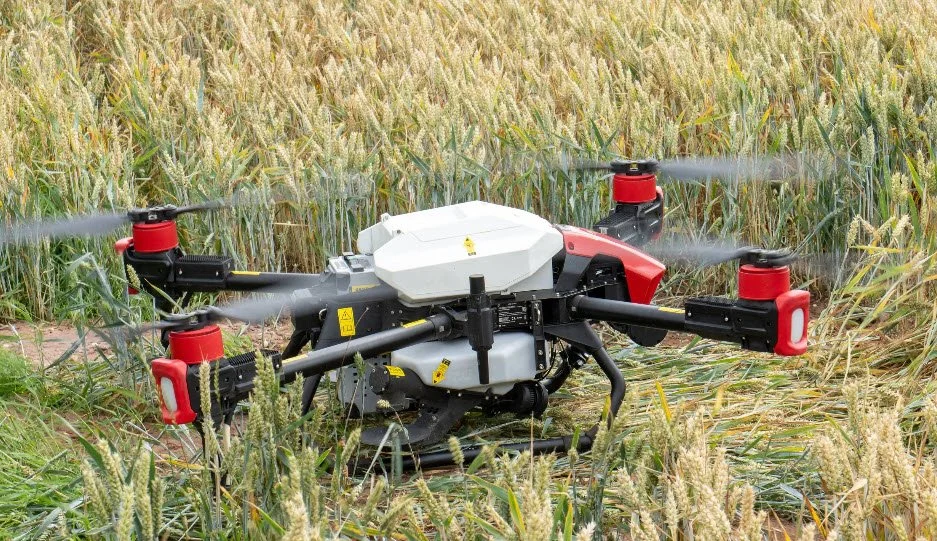
Consider fertiliser spreading. A drone can apply nitrogen to a struggling patch of wheat without running over the crop. It can also spread slug pellets precisely where the damage is worst, rather than blanketing the whole field. That reduces input costs and cuts the environmental load, which is good for the farm and the surrounding ecosystem.
Pesticide application is another area where drones are making inroads. In orchards and vineyards, drones can reach foliage that ground sprayers miss, and they do it with less drift. It is not always the right answer, especially for large broadacre crops, but for smaller blocks and specialty crops it is a serious option.
Crop monitoring is perhaps the most accessible use. A quick flight with a consumer drone can reveal problem areas long before they show up from the road. Combine that with regular flights and you get a time series of crop development that helps you make better decisions about irrigation, nutrition, and harvest timing.
The Business Case for Drone Seeding
Cost is always the first question. A drone seeding service will not be cheaper than a contractor with a drill on a big field, but it can be cheaper than losing a week of establishment time. The maths changes when you factor in yield, soil damage, and the cost of replanting a failed crop.
For smaller farms, the per-hectare price is higher, but the flexibility is worth something. You can call a provider on a Thursday evening and have the field seeded by Saturday morning, even if the ground is too wet for anything else. That kind of responsiveness is hard to put a number on, but it shows up in the bank account at harvest.
There is also the carbon angle. A drone burns a fraction of the fuel that a tractor does, and it does not compact the soil. That supports carbon sequestration in the soil, which is increasingly important for farm payments and market access. Regenerative agriculture is built on principles like minimal disturbance and continuous cover, and drone seeding supports both.
Looking Ahead
The technology is moving fast. Battery life is improving, hoppers are getting bigger, and the software is becoming more intuitive. Companies like AeroVironment and Yamaha have been in this space for years, and the arrival of DJI's Agras line has brought the price down significantly. It is not a niche experiment anymore; it is a practical tool.
I have seen a drone seed a steep hillside that a tractor could not climb. I have seen it overseed a pasture with clover without disturbing the existing grass. I have seen it drop cover crop seed into standing maize, something that is nearly impossible with ground equipment. Each time, the result was better than I expected.
That is not to say it works everywhere. For flat, dry, well-drained fields, a conventional drill is still the benchmark. But for the awkward, the urgent, and the wet, drone seeding services are becoming the first call for many growers. The best approach is to talk to a provider, test it on a small block, and see how it performs on your ground.
The future of farming is not about choosing between drones and tractors. It is about using both where they work best. Drone seeding services are another tool in the box, and for the right job, they are hard to beat.